Showing posts with label Mossad operations. Show all posts

Saturday, May 31, 2025

Operation Diamond: How Israel Stole a Soviet MiG-21 in History's Most Daring Jet Heist

In the early 1960s, Israel faced a growing threat from its neighbors. The MiG-21, the Soviet Union’s most advanced fighter jet, which was introduced in 1960, was the backbone of Arab air forces, particularly in Egypt, Syria, and Iraq. Israeli pilots had never encountered this aircraft in combat, and intelligence on its capabilities was scarce. If war broke out, Israel needed an advantage—something that would turn the tide in the skies.

STamp depicting a Mig-21
The mastermind behind the operation was Meir Amit, the head of Mossad, Israel’s intelligence agency. Amit was known for his audacious strategies, and he understood that acquiring a MiG-21 would give Israel a vital edge. The plan was endorsed by Prime Minister Levi Eshkol and Major General Mordechai “Mottie” Hod, the commander of the Israeli Air Force. style="padding-left: 10px;"

But how do you steal a top-secret fighter jet? The answer lay in Munir Redfa, an Iraqi Air Force pilot. Munir Redfa, born in 1934 in Baghdad, felt alienated due to his Christian heritage and had grown disgusted with orders to bomb Kurdish villages. Mossad operatives approached him with an offer: defect to Israel, bring the MiG-21, and secure a new life for himself and his family and of course with a million dollars.

After months of secret meetings, Redfa agreed. His family was smuggled out of Iraq before his flight to ensure their safety. Then, on August 16, 1966, Redfa took off on a routine training mission—but instead of returning to his base, he veered toward Israel.

As Redfa flew toward Israeli airspace, Jordanian radar picked up the rogue aircraft. Alarmed, Jordanian authorities issued alerts to nearby air traffic control stations, and two Jordanian Hawker Hunter jets were scrambled to intercept him. But Redfa was flying at over 9000 meters and at high speed, making it nearly impossible for them to catch him. To make matters more confusing, Iraq failed to respond to Jordan’s inquiries, and Syria falsely claimed responsibility for the aircraft, reassuring Jordan that it was part of a training mission. This miscommunication allowed Redfa to cross Jordanian airspace unchallenged.

As Redfa entered Israeli airspace, he was met by two Dassault Mirage III jets from the Israeli Air Force, which escorted him safely to Hatzor Air Base. Upon landing, Redfa was immediately taken into protective custody, and the MiG-21 was secured for examination.

For Mossad, this was a triumph. Israeli engineers and pilots wasted no time studying the aircraft, uncovering its weaknesses and strengths. The MiG-21 proved to be a goldmine of intelligence. Israeli specialists dissected its technology, learning its flight dynamics, weapon systems, and vulnerabilities. When war erupted in 1967, Israel’s newfound knowledge played a crucial role in achieving air superiority. Israeli pilots used their insights to outmaneuver and destroy dozens of enemy MiG-21s, ensuring dominance over the skies during the Six-Day War. But the significance of Operation Diamond extended beyond Israel. The United States, eager to understand Soviet aviation technology, was granted access to study the aircraft. The insights gained helped U.S. defense planners develop tactics against Soviet-built jets in future conflicts, marking a strategic victory in the Cold War.

After his defection, Redfa lived in Israel for a time before eventually settling in another Western country. He passed away in 1998 due to a heart attack. His MiG-21 remains on display at the Israeli Air Force Museum in Hatzerim, a testament to one of Mossad’s most daring operations.

Munir Redfa's MiG-21, the subject of Operation Diamond, at the Israeli Air Force Museum in Hatzerim
By Oren Rozen - Own work, CC BY-SA 3.0, https://commons.wikimedia.org/w/index.php?curid=11051235


Print Friendly and PDF

Saturday, April 12, 2025

From Osirak to Stuxnet: Israel’s Silent War Against the Bomb

In the early 1960s, Egyptian President Gamal Abdel Nasser began exploring nuclear options. Egypt had a research reactor supplied by the Soviet Union in 1961, and rumors abounded that Nasser was interested in acquiring nuclear weapons to counter Israel, especially after Egypt’s defeat in the 1956 Suez Crisis.

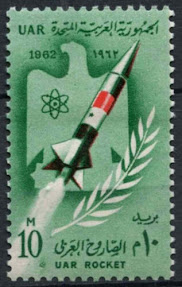
Egypt's nuclear missile program
In 1963, Israel became increasingly concerned about Egypt's rocket program, which was supported by German scientists and aimed at developing advanced missile technology. There were claims that Egypt was attempting to equip missiles with radioactive waste and potentially nuclear warheads. During this time, U.S. President John F. Kennedy also pressured Israeli leaders to allow inspections of the Dimona nuclear reactor, fearing that Israel might be developing nuclear weapons.

However, Egypt's progress stalled. The Six-Day War of 1967, in which Egypt suffered a crushing defeat, diverted military and financial resources. After Nasser’s death in 1970 and Sadat’s peace with Israel, Egyptian nuclear ambitions shifted to peaceful energy development.

But Egypt wasn’t the only nuclear concern on Israel’s radar. As one threat faded, another began to rise — this time from the east. In the 1970s, Saddam Hussein’s regime in Iraq, pursued nuclear technology under the pretense of civilian energy. Iraq purchased a French-made Osirak reactor with the help of France and some Italian cooperation. The reactor, officially for peaceful purposes, was not suitable for energy generation, but it was very well-suited for plutonium production—a red flag for nuclear weapons development.

So Begin and his team cook up a plan. A crazy plan. Fly thousands of kilometers into enemy territory, undetected, bomb the reactor before it goes live, and fly back home — all without starting World War III.

The pilots? Hand-picked, young, and fearless. Among them: a future astronaut named Ilan Ramon (maybe a future blog post). They trained for months, memorizing maps, practicing flying just above the desert sand to avoid radar.

And then, on June 7, 1981, they launched. Eight F-16s with F-15 escorts. Silent. Low. Fast. Like shadows across the sand.

They reached the reactor. A few seconds of dive bombing. Boom. The Osirak reactor is reduced to rubble. One direct hit after another. No one even had time to blink.

Jordan's stamp for Israel's destruction of Iraq's reactor
Iraq's stamp for Israel's destruction of Iraq's reactor

The pilots turned around and headed home. Mission accomplished. Not a single Israeli aircraft was lost.

Back in Israel? Celebrations. Relief. History made.

Around the world? Not so much. Even the United States condemned it, publicly. But behind the scenes, many would later admit: it probably stopped Saddam from becoming a nuclear-armed tyrant.

When the Gulf War rolled around in 1991, Saddam was launching Scud missiles at Israel — but without nuclear warheads. Operation Opera wasn’t just a surgical strike. It was a message. Don’t mess with us. We’ll stop you before you even start.

Is that the end of the story? Nope.

Iran’s nuclear program began under the Shah in the 1970s, with Western support. But after the 1979 Islamic Revolution, the new regime under Ayatollah Khomeini temporarily halted the program, viewing it as a "Western disease." That attitude changed during the Iran-Iraq War (1980–88).

In the 1990s and 2000s, Iran resumed its nuclear program with Russian and Chinese help. Western intelligence concluded that Iran had covert weapons-related ambitions, especially after revelations about Natanz and Fordow enrichment sites.

As Iraq faded into the history books, a new shadow began to loom over Israel — Iran. Not just any threat, but one wrapped in religious ideology, fiery speeches, and long-range ambitions. Iran's leaders weren't shy. They talked openly — and often — about wiping Israel off the map. And they weren’t just talking. They were backing groups like Hezbollah in Lebanon and Hamas in Gaza — bitter enemies sworn to Israel’s destruction.

But this time, the threat wasn’t just words or rockets. It was uranium enrichment, underground bunkers, and missile silos. Iran was playing a long game — and Israel knew it. If Iran got the bomb, it wouldn’t just tip the balance of power. It could endanger Israel’s very existence.

So, what did Israel do? They got creative. Quiet. Surgical.

Stamp depicting a bullet hole
In 2010, computers at Iran’s Natanz facility started acting… strange. Centrifuges spinning out of control. Equipment crashing. It was like the machines had been possessed. But it wasn’t a ghost — it was Stuxnet, a powerful cyberweapon, reportedly built by Israeli and American intelligence. It was the first time a virus acted like a guided missile, and it set Iran’s nuclear ambitions back by years.

But the digital war wasn’t the only front.

Across Tehran and other cities, Iranian nuclear scientists began having very bad luck. Car bombs. Mysterious motorcycle assassins. Silenced pistols in the early morning. No one claimed responsibility, but everyone had a pretty good idea who was behind it. Mossad had sent a message: "We’re watching, and we’ll act before it’s too late."

On the diplomatic stage, things were heating up too. When the world powers signed the 2015 Iran nuclear deal, Israel was furious. Prime Minister Netanyahu even went to the U.S. Congress to protest, saying: This deal doesn’t stop Iran — it paves their path to the bomb. Israel kept up the pressure, even after the U.S. pulled out of the deal, and worked behind the scenes to keep Iran’s nuclear ambitions in check.

The story of nuclear ambitions in the Middle East isn’t over. But if history has shown anything, it’s this: Israel won’t wait for the threat to arrive. It will meet it — in the skies, in cyberspace, and in the shadows.


Edited

American B52 Stealth Bomber like the one that destroyed the reactors
On 13th June 2025, after years of threats and actions from the Iranian regime against Israel, Israel finally retaliated and in a 12 day war, Israel totally obliterated the Iranian missile program. 

Realizing that Israel had destroyed all Iran's air defense, this pave the way for the United States to use their bunker buster bombs and destroy the nuclear reactors. The world was saved! For now! China and others may try to replenish supplies, but it has been pushed back. 

Print Friendly and PDF

Wednesday, March 12, 2025

How Israel Outsmarted France and Sailed Away with Its Own Warships

The Cherbourg boats incident was a significant event that occurred in December 1969, involving Israel's acquisition of naval vessels under unusual circumstances.

Relationship between France and Israel had been relatively good, with France being a major supplier of Israeli military equipment. We all know about the relationship which led to the 1956 Sinai Campaign as well as our first atomic reactor. In the mid-1960s, Israel ordered 12 missile boats from France. These were Sa'ar-class vessels, to be built at the Cherbourg shipyards in France.

However, after the 1967 Six-Day War, French policy toward Israel changed dramatically under President Charles de Gaulle. In December 1968, France imposed an arms embargo on Israel. Despite the embargo, five of the boats had already been delivered, but the remaining seven were stuck in Cherbourg, paid for but not released. The embargo was a severe blow to Israel, as the missile boats were a crucial part of its naval defense strategy.

Admiral Mordechai "Mokka" Limon was the head of Israel’s arms procurement delegation in France at the time. He understood that we needed these ships and devised an elaborate plan to obtain these vessels. He had played a crucial role in negotiating the original missile boat deal and together with Shimon Peres, Director-General of the Defense Ministry at the time, they planned an elaborate plan to get the boats to Israel. Peres secured the necessary government approval and funding for the covert operation.

So what was the plan, you ask? Well, Limon created a fictitious Norwegian oil company called "Starboat," which supposedly purchased the boats for oil exploration in the North Sea, helping circumvent French authorities. This ruse allowed Israeli personnel to continue working on the boats in Cherbourg without raising suspicion.

He personally recruited a team of Israeli naval officers and sailors who quietly traveled to Cherbourg and prepared for the operation. Actually they were almost caught by immigration into France but a friendly Moroccan-born Jew let them through.

Limon meticulously planned the logistics of the escape, choosing Christmas Eve when French surveillance would be minimal and officials would be on holiday. He coordinated with Israeli intelligence to ensure the success of the operation, planning everything from false documentation to refueling arrangements.

On Christmas Eve 1969, the sea conditions in Cherbourg port were quite dramatic. A Force 9 gale was blowing, which is a strong gale with wind speeds between 41-47 knots (47-54 mph or 75-88 km/h). This kind of weather would have created very rough sea conditions, with high waves and challenging navigation. It was on this night, when most port workers and French authorities were celebrating the holiday, that the Israeli crews, disguised as civilians, boarded the boats. Without clearance from the French authorities, showing almost no lights, the missile boats quietly slipped out of Cherbourg harbor into the teeth of the Force 9 gale which kept even large freighters from venturing out.

They sailed through the stormy Atlantic Ocean, avoiding detection. The boats traveled a secretly pre-planned route, refueling at sea from Israeli commercial ships. By the time French authorities realized what had happened, the vessels were already in international waters. This operation became known as "Operation Noa," named after the daughter of Admiral Mordechai Limon who orchestrated the plan.

After a long journey of more than 3,000 nautical miles, they reached the Israeli port of Haifa on New Year's Eve, December 31, 1969.

The escape was an embarrassment for France, as it demonstrated Israel's ability to outmaneuver a major Western power. Though French authorities were angered, they did not take serious action beyond diplomatic protests.

The incident caused diplomatic tension between France and Israel but ultimately led to no serious consequences. The boats later became an important part of the Israeli Navy fleet and were used in various operations. The Israeli Navy was able to revise our strategy in favor of smaller missile boats, rather than the larger, slower destroyers. The French-built Saar class boats which were "liberated" from Cherbourg were the first fast attack vessels to meet the new needs.

The missile boats later played a key role in developing Israel’s missile boat fleet, which would prove crucial during the Yom Kippur War (1973), particularly in naval battles against Egypt and Syria.

During the South Africa apartheid era, Israel and South Africa maintained discreet military cooperation, and South Africa became interested in the Sa'ar / Reshef-class vessels due to their impressive performance. In the late 1970s and early 1980s, South Africa acquired modified versions of these missile boats, known as the "Minister" class or sometimes "Reshef" class in South Africa. South Africa ultimately operated nine vessels based on the Israeli Sa'ar design, built with Israeli assistance. I was told that these were named the Minister class, with vessels bearing names like SAS Minister of Defense, SAS Minister of Transport, etc. Not sure if that is true.


The operation was a brilliant combination of naval expertise, strategic deception, and intelligence work. I am hoping for more stories like these.

Print Friendly and PDF

Statcounter