Thursday, November 25, 2021

Vote for me

I have been nominated for a PTS Award. This year they are giving the general public the chance to cast their vote. 

Help me win this award. Vote for me! 

https://www.thepts.net/peoples-choice.html


Thank you for your support.

Wednesday, November 24, 2021

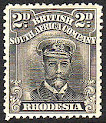
Rhodesia has invalid stamps

Who has heard of Rhodesia? Raise your hand. You have? You are showing your age. Today people know it as Zimbabwe.

We will use Rhodesia from here on because philatelically that is where the fun is. Now we all know that the Digital Philatelist and his award winning site was once head of the Rhodesian Study Circle so why the great interest? The truth is that first and foremost there are not many issues and second of all the name changes make it an exciting period of history to learn and enjoy.

Through no fault of his own, Cecil John Rhodes was born with a weakness of the lungs and so was kept at home and also stopped him from going to university. His father sent him to South Africa to join his brother, out of sight, out of mind perhaps? Anyway Cecil got involved in the diamond industry there and with some friends created a mining company which turned out to be very successful.

He believed in the British Empire and had dreams of building a railroad from Cape Town to Cairo. I dream of going to Australia but I am not doing anything about that. However others also had designs on the middle of Africa - the Germans, Belgians, and Portuguese. But to start with, he had to go through the area now known as Zimbabwe. Somehow he got King Lobengula, the head of the local tribe,  the Matabeles, of the southern part of Rhodesia,  to sign a treaty with him giving him full rights and he convinced the British government, to grant a charter to a new company, the British South Africa Company (BSAC), to develop the new territory. Poor King Lobengula did not really know what he was signing away.

Now what do they need? Mail! The first post was established by the British South Africa Company (BSA) consisting of a route from Bulawayo to Mafeking. Initially British South Africa Company stamps were not recognized for international mail but this was changed a year after the first stamps arrived. Over the next few years the area the BSA had control of increased and included land north of the Zambezi River, an area known today as Zambia.
The area was named Rhodesia after Cecil John Rhodes. Not bad for a kid who was sent out in the world by his dad. Anyway the name "Rhodesia" was then added to BSA stamps.


Around 1923 Rhodesia was divided into two and the Zambezi River was the separation point, Southern Rhodesia and Northern Rhodesia.

In 1953 The Federation of Rhodesia and Nyasaland was created which included Southern Rhodesia, Northern Rhodesia and Nyasaland. This ended in 1963 when Northern Rhodesia gained independence from the United Kingdom becoming Zambia and Nyasaland became Malawi. At this time, Britain, France and Belgium were speeding up their withdrawal from Africa believing that colonial rule was no longer sustainable in Africa. Southern Rhodesia was left out of this and was still controlled by the British.

Southern Rhodesia wanted independence from Britain but all Britain had to offer was a deal on par with Australia, Canada and New Zealand. The British refused to offer independence and the Rhodesian were a tad angry. World opinion was not exactly with Britain but they were in a quagmire because if they offered independence, then this would have a domino effect throughout the commonwealth.

In 1964 Ian Smith became prime minister and here is when it gets juicy. In June 1964, Britain informed
Smith that Southern Rhodesia would not be represented at the year's Commonwealth Prime Ministers' Conference. How insulting can you get? Southern Rhodesia held a referendum and there was a majority of support for a declaration of independence from Britain.

Cutting out a lot of politics, Rhodesia declared independence in 11th November 1965 which was actually Armistice Day. This became known as the Unilateral Declaration of Independence (UDI). This was condemned by

the UN as well as the Security Council and sanctions were imposed. Southern Rhodesia subsequently renamed itself Rhodesia.

So what about the stamps? After all this is a blog about stamps! As part of the sanctions, Rhodesian postage stamps were considered "illegal" and therefor "invalid" and that mail carrying the invalid stamps was treated as if they were posted without stamps.

Mail arriving in England and some other commonwealth countries were subjected to additional payment. They received a cancel of "Stamps not valid" and the amount to pay. This means that the letter was paid for twice, once by the sender and once by the person who received the letter. 

In April 1970 the British also attached a red label about Southern Rhodesian stamps and you can see an example below:


This is another example of what is known as Postkrieg or Postal War, a war waged by Britain against Rhodesia. For another example, check out my video on YouTube.

Edit: Strangely today (29th November 2021) I just saw a video by Graham Beck of Exploring Stamps in which he talks about stamps from Zimbabwe. Check it out: https://www.youtube.com/watch?v=oEWv3BTAXc8


Print Friendly and PDF

Thursday, November 18, 2021

Victory and #Beethoven

I haven't written a blog for a few weeks. Sounds like an apology but it isn't, it is a statement of fact. I am trying to broaden the amount of people who view my channels, not for me, but for all of us. There are many videos out there about stamps and you get the feeling that they are technical, oh this stamp is expensive or this stamp was issued on and is part of a set, blah blah. I don't want to do that. I explain that in my message to people who have not subscribed. Check it out here:


I had a lot of good feedback from my last video as it is a subject that people did not know about. I also believe that there are many judges who look at a modern cover and give it a snarl, kind of like saying that it is not worth anything. That may be true, but there is a story behind it and the story is worth telling.

Today I am adding a new video about the Victory. Yes, I did a blog post about it, view it here, however I found new information and wanted to tell you about it.


Please watch to the end, subscribe, comment and like, we need to get more people involved, it is important to all of us.

Thursday, November 11, 2021

Postkrieg or a Postal war

 OK, you are right. I haven't written a blog for a few weeks. There is a reason for that. I believe that the way to get others involved in my work of love is by short videos.

So here is one about a Postal War. I hope you enjoy it. Please watch to the end so that YouTube will acknowledge it as well


Wednesday, October 27, 2021

Video This war is a Jewish War

Second episode. I hope you like it. 

Don’t forget to click like, it is important for me


Tuesday, October 19, 2021

A stamp created under a siege, the Jerusalem siege

We learned from a previous post Jerusalem is under siege that from December 1947, Jewish Jerusalem
was under a de-facto siege. At this time there were about 100,000 Jews and about 65,000 Arabs living in Jerusalem, but the vast majority of those Arabs lived in the old city. (Jerusalem is the small red blob on the middle right edge of the stamp).

Transportation to the city from the Jewish area was limited to the only road in existence, and that road was under constant attack. Supplies were in short supply.

The British had enough problems. They had had enough. It was just three short years after the end of World War II; India had their independence and they were already out of there and the Palestine mandate was drawing to an end, so why would they want to get involved and help Jews; despite their requirement under the mandate.

The British had announced that they were closing down their postal services in Jerusalem as of May 5th. However on April 20th, Arabs ambushed a huge 350-strong vehicle convoy on its way to Jerusalem. Many soldiers and passengers were killed. What was the British answer? To close the postal services! As of April 25th there were no more postal services to and from Jerusalem.

Now from other posts in this blog we know that the Jewish community created their own postal system. Read here. This was supposed to take effect as of May 2nd. Houston we have a problem, there is no way to get the stamps to Jerusalem, the roads are closed!

There was heavy fighting between Arabs and Jews in Jerusalem and it wasn't exactly safe to get to a post office anyway. May 8th the Jewish forces seemed to overcome the Arab forces in the Jerusalem area and a semblance of peace evolved. So what do we do now? Let's call our family and let them know. Problem is that this is 1948 and there were very few phone lines and the only method was writing.

Now there is a new problem, they had no stamps as supplies were not coming through. There were also no JNF stamps on hand to use and overprint. So what were they to do?

You know the Partition Plan JNF labels? Well the printer of those stamps, Haoman Press, still had the printing plates. Problem solved, let us add the word Postage and the face value of the stamp. OK then, they decided to issue three values, a 5mil for the printed letter rate, a 10mil for the regular rate and 25 mil for registered.

So Haoman Press printed the stamps and to speed up the process, they had Lipshitz Press add the overprint. This went on sale on May 9th. Amazing, from idea to store within 24 hours! Looks like they really wanted to send mail.

There were long queues of people who wanted to buy these stamps, many of them as souvenirs, and supplies ran out within a few hours. But as it turns out, Haomnan was still printing sheets, but this time they were adding the overprints themselves, in the same process. However they added the overprints in a different way. In the first issue, the word Postage was added at the top and in this issue, they were added at the bottom. This issue was put on sale on May 10th. Collectors know these as First Issue and Second Issue, I wonder why.

May 14th Israeli statehood was declared and on May 16th the Doar Ivri stamps went on sale, except in Jerusalem. A war? A siege? Both.

Pressure was on to open the main post office in Jerusalem and because they were running out of the 5mil stamp, they ordered a reprint. The post office was opened on May 21st and the new overprints were delivered on May 24th. Problem was that the 5 of the 5mils was slightly different. So what name do we give this issue? Third Issue, right? Actually the also became known as Jerusalem Locals I, II and III to differentiate them from the Palestine Mandate overprints.

The history of Jerusalem is always exciting, but the study of stamps in the framework of the struggle makes it more enjoyable.


Print Friendly and PDF

Thursday, October 14, 2021

My new YouTube Channel

This is my first attempt. I hope you like it.


Statcounter