Showing posts with label Spotlight. Show all posts

Sunday, December 5, 2021

Irish Christmas stamps invoke anger

December 25th, Christmas Day, a time for rejoicing for the entire Christian / Catholic world (some celebrate a week or so later, like in Georigia). Despite being Jewish and not celebrating Christmas, it is nice to see the spirit of Christmas and the many pretty stamps that are issued all over the world.

Ireland innocently brought out a set of stamps, or adhesive labels for Christmas 2021. The set includes four stamps for local postage with the words "Peace and Joy", "Naughty or Nice?", "Ho Ho Ho" and "Sending Hugs" and two stamps for international postage for "Nollaig Shona" (which means Merry Christmas in Gaelic Irish) "Love". It was the local stamps that invoked the ire of the public. Who would have thought that these stamps would have invoked such feelings?

The outrage began with a call to a popular program named Liveline where someone emailed them to pent his frustration at the choice, saying that the stamps used for Irish addresses were secular and didn’t include scenes from Jesus’ birth, such as the Nativity scene or anything that wasn't to his liking.

He made a claim that instead of the Nativity scene, local stamps had phrases such as ‘naughty or nice’, and ‘ho ho ho’. This was actually a part of the problem.


Other callers felt that the phrase ‘naughty or nice’ implies sex and another said that she didn’t want to send a Christmas card to her local priest with a naughty or nice stamp. The phrase ‘ho ho ho’ stamp together with the sexual implication of the naughty stamp concerned people about the possible innuendo.


"The national Christmas stamp range, which supposedly celebrates a major and very ancient Christian festival on December 25, is, as one caller said to Joe Duffy, effectively discriminatory, because if you want a religious stamp you have to pay extra."

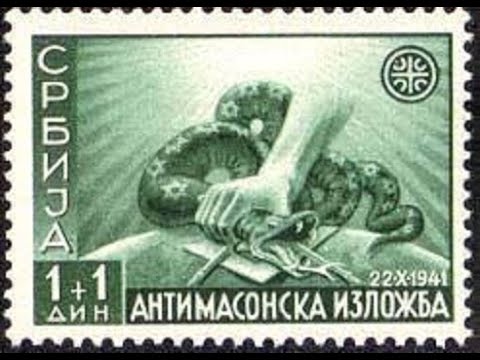





Wednesday, October 27, 2021

Video This war is a Jewish War

Second episode. I hope you like it. 

Don’t forget to click like, it is important for me


Thursday, October 14, 2021

My new YouTube Channel

This is my first attempt. I hope you like it.


Monday, September 27, 2021

Cito cito cito

Today we look at a letter and quite often we don't give a thought to how the letter arrived, if we are luck enough for it to arrive. Very often our main mode of communication is WhatsApp or something similar or even an email, although sometimes our mail goes into a spam folder.

But this was not always the case. Are any of you marathon runners? Have you ever given any thought to its origin, and no it is not because of the Olympics; that only started in 1896 at the first Olympics. Well way back before then, there were no computers or smartphones and very often no writing paper or people who could read or write, so what happens if you need to bring news to Athens of an important victory over an invading army of Persians? Well the legend says that in 490BC, an ancient Greek messenger raced from the site of Marathon to Athens, a distance of about 40 kilometers and hence the marathon was born. Personally I don't even feel like driving 40km but I am not a Greek messenger. Apparently after giving the message, the poor exhausted messenger simply collapsed and died.

Legend or not, it shows how important a message is and hence our story of the day. We will fast forward almost 2000 years to the Republic of Venice. The Republic of Venice realized early on that they also need to transfer messages to other cities, in Italy and elsewhere and they allowed for a courier service. Venetians were merchants and traded all over Europe. News regarding prices, goods, merchants and others was very important to get the best deals. The earlier the news arrived, the better the result. This is actually not much different from day, but the Venetian Courier service filled a void!

The service started off as a private service but in the 14th Century, the Great Council decreed that all couriers operating in Venice were subject to the control of their supervisors and also on rates. So the service became an official postal service. I actually have not found any information on the rates but if someone knows, I would be happy to update this post.

So now you employ the service to take a message from Venice to somewhere else, say Verona and you want it to get there quickly, so you pay extra and a notation of "cito" or "haste" is added to your letter. A horse was almost always used in mail but if the mail has the notation of cito, it means the horse must run. I have no idea how long it took the Greek messenger to run 40 km before he died, but Venice to Verona is about 120km, meaning treble the amount and a trot or a run can take ages. So you can pay extra by adding "cito cito cito" would mean fast, fast, fast, in essence no resting and top speed. There is little documentation about this service only in the age of customer service did people realize that you need to document a service so that people can ignore it.

Let's be real, even a horse would not be able to run the 120km at top speed. So if you are in a real hurry, you can can pay for the change of a horse along the way. The drawing of a stirrup on the letter, as on the image on the right, indicates that you are entitled to a change of horse along the way. So you pay for as many changes of horses that you want. An image of three stirrups indicates a change of three other horses along the way.

Now we have couriers carrying important messages throughout Europe and who are the messages of interest to? Your rivals, meaning other merchants. So you need some security, some insurance, right? A hangman's gallows was added to the letter threatening death by hanging to anyone interfering with the mission. I have seen two gallows on a letter, not sure what that would mean, you can't exactly kill someone twice, can you?

The item shown below was sent from the Rectors of Verona (yes, it also worked in the reverse direction) to the Chief of Venice, the Head of the Council of Ten (one of the major governing bodies of the Republic of Venice) in July 1506. The three citos shows maximum speed and the stirrup grants him a horse change alone the way.


For more information see:
  • "Post and Courier Service of Early Modern Italy" ~ Postal History Journal No 055
  • "The Cito Mark Part I" ~ American Philatelist Vol 069 No 06, March 1956
  • "The Cito Mark Part II" ~ American Philatelist Vol 069 No 07, April 1956


Print Friendly and PDF

Monday, August 30, 2021

Story of Ceska Trebova

I was preparing a page for my exhibit and trying to think of what to use and I cam across the stamp on the right. The stamp shows the coat of arms of a Czech town called Česká Třebová situated on the border of Bohemia and Moravia.

According to the information sent to me by their webmaster, the name of the town is based on the old Czech word triebiti meaning chop down because at that time the entire area was covered with forests which needed to be cleared before settling there. The town received the addition of Česká so as to distinguish itself from other areas named Třebová.

Enough of that, let us look at the coat of arms. During history Česká Třebová was a town of potters, weavers and peasants. A simple clerk took care of the town's official seal. Not sure why but he pledged his life for its safety and guarded it very carefully. Unfortunately for him and despite his best efforts, the seal disappeared. Both he and his wife searched everywhere for it, his life was at stake. But it was no where to be found.

The poor guy was arrested and put in jail. He was able to watch in despair  as the carpenters build the gallows where he would be hanged. They took this very seriously. His faithful wife continued the search but with little hope. She looked out the window and saw a rooster standing in the yard, clutching something under its claws. Running out she found that the bird had the seal in his claws and she managed to rescue her husband at the very last moment. To commemorate this event they changed the coat of arms to be a rooster with a human head.

Now we get to the human head which is what caught my eye in the first place. Throughout medieval Europe, there were many anti Jewish laws in place. Jews seemed to be the scapegoats for anything including the Black Death. Anything bad happened, blame the Jews. Today it is blame Israel, same thing but off topic.

So now the question was, how to identify who is Jewish so that people can decide whether they want to do business with them or not. The Nazis used a yellow badge in the form of a star of David. In ancient times it was a piece of clothing. In German-speaking Europe, as early as mid 13th century, there was a requirement for Jews to wear a Judenhut which was a cone-shaped hat, such as the one in the Česká Třebová coat of arms! On the left you can see similar hats. Check this for more information on the Jewish star.

The coat of arms of Judenburg in Austria also has the head of a Jew wearing the funny hat. Now the question is why were the Jews of this small town in the Czech area subjected to wear this hat. According to their museum this was not intended as a symbol of anti-Semitism. Jews were among the most educated sections of their society as they were one of the very few who could read and write. This was custom dress for a Jew. They claim that it was a sign of respect.

Maybe that is what they believed then, thoughts?


Print Friendly and PDF

Statcounter