Neville Chamberlain, the British Prime Minister on the eve of WWII, said “In war, whichever side may call itself the victor, there are no winners, but all are losers.” Very true words, though they went unheeded to a German dictator who had dreams of ruling over all of Europe.
We all know the history of WWII and we will not rehash it here. Germany, as we know lost the war. However even before the Allies had won the war, they were already deciding what to do about Germany. It was actually this kind of attitude that brought on WW2, two decades after the first one. In February 1945, before the war ended, U.S. President Franklin D. Roosevelt, British Prime Minister Winston Churchill and Russian Premier Joseph Stalin met near Yalta, Crimea, to discuss the reorganization of post-WWII Europe. The Western powers wanted to establish democratic regimes and Stalin wanted a Soviet “sphere of influence” in Central and Eastern Europe.
On May 7, 1945 Nazi Germany finally capitulated to the victorious Allies. Russian troops had entered Berlin's northern and eastern perimeters on April 21st, and on May 2nd Berlin's commandant surrendered to the Red Army. Allied troops started arriving in Berlin at the beginning of July 1945 and the exclusive Soviet occupation finally ended. July 11th the four powers established a Kommendatura to govern Berlin.
The allies decided to divide Germany into four occupied zones: Great Britain in the northwest, France in the southwest, the United States in the south and the Soviet Union in the east. Berlin, the capital city, now situated in Soviet territory, was also divided into the same four occupied zones.
Now the fun starts. Berlin had been devastated by the war. It was a city in ruins; every third building was destroyed. However they quickly re-established infrastructure such as railroads, subways and newspaper services. Food was of course, in short supply. Post offices were either totally destroyed or heavily damaged; only a third remained at least partially usable. There was also mail that had piled up in the mail boxes and post offices in the last days of the war and had not been dealt with. Outgoing mail was still there as outside destinations had been cut; incoming mail could not be delivered because the war was raging on.
What to do with mail? The beginning of actual regular postal services began in August 1945. In the preceding months the post offices spent much of their time in other than mail-related work such as rebuilding their destroyed facilities. But mail was sent out. In the Soviet Zone many areas produced their own local issue stamps from 1945 through 1946. These local issues (Lokalausgaben) continued to be valid until October 31st 1946.
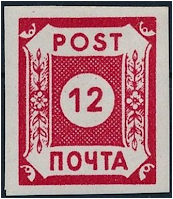 The powers agreed that all stamps would use the Roman/Latin alphabet for official purposes. A 12Pf rate was decided on for a regional letter and was valid for mail sent to any part of the Allied Occupied Region. The Soviet Zone 12Pf was valid for use in any part of the Zone. And here a conflict arose. On 23rd June 1945, the Soviets issued a red 12pf stamp for use in East Saxony but using Cyrillic letters. The bilingual inscription "Post / Potschta" was in breach of agreements and protests by the "Western" powers ensured that it was rapidly withdrawn within a few hours. There is a question today of whether these stamps were actually issued or withdrawn before they got to the post offices in East Saxony.
During August of 1945, Berliners could start writing to their families, friends and even business connections. Life started up again. The Soviets quickly issued a stamp to be used in Berlin, the Bear stamp. It was not until 1948 that the Allies issued stamps with a Berlin overprint specially for use in Berlin. The Allies issued a set of stamps which could be used anywhere in the occupied zones. In some areas there were no available stamps. See my video on Denazification.
Berlin, although governed together by the four powers, was in the heart of the Soviet zone of what once was Germany, far away from the Allied occupied zone. There was nothing in place to guarantee free Allied access to Berlin. The Russians claimed that West Berlin was a part of their zone as it was in the general Soviet zone. In June 1948 the Allied forces decided that the area of Germany that they were controlling would become independent, having its own currency and of course stamps. The Soviets totally disagreed and cut off all western access to Berlin. Roads, railways, waterways and even electricity were cut. Food was in scarce supply. The US Military governor for Germany ordered all available transport planes to fly food and other necessary supplies into West Berlin and so began the Berlin airlift. The Tegel airport was built in the French zone to handle all the aircraft.
As a means to defray the costs of this massive resupply operation and to provide continuing assistance to the people of Berlin, the military government passed a law requiring a 2Pf tax on various classes of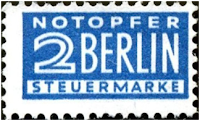 mail. The tax was to be paid ONLY by the blue stamp, first issued on Dec. 1, 1948 and inscribed "NOTOPFER / 2 BERLIN / STEURMARKE". This translates to "Emergency Victims / 2 Berlin / Tax Stamp". This tax stamp was sold by the post office and it had no use other than on mail. Initially, the Notopfer stamp was required only in the combined American and British zones. It was later used in the French Zone. Strangely it was never used in Berlin itself, nor was it required on mail to Berlin, on mail to the Soviet Zone and on mail to foreign destinations. Initially every class of mail required the Notopfer. This represented a 10% tax for regular mail, but was a whopping 50% for printed matter. Businesses complained loudly about this and printed matter was later made exempt.
The Soviet blockade was eventually lifted in May 1949 but the use of the Notopfer stamp continued until 1956.
West Germany or the Republic of Germany was created in May 1949 when the United States, Great Britain, and France consolidated those zones under their occupation. East Germany, or the German Democratic Republic, was established in October 1949. West Germany was allied with the U.S., the U.K. and France and became a western capitalist country with a market economy and East Germany was allied by the Soviet Union and became communist. However Berlin was still a divided city and West Germany wanted her as their capital. East Germany claimed Berlin as her capital and that was a source for a different conflict.

We all know the history of WWII and we will not rehash it here. Germany, as we know lost the war. However even before the Allies had won the war, they were already deciding what to do about Germany. It was actually this kind of attitude that brought on WW2, two decades after the first one. In February 1945, before the war ended, U.S. President Franklin D. Roosevelt, British Prime Minister Winston Churchill and Russian Premier Joseph Stalin met near Yalta, Crimea, to discuss the reorganization of post-WWII Europe. The Western powers wanted to establish democratic regimes and Stalin wanted a Soviet “sphere of influence” in Central and Eastern Europe.
On May 7, 1945 Nazi Germany finally capitulated to the victorious Allies. Russian troops had entered Berlin's northern and eastern perimeters on April 21st, and on May 2nd Berlin's commandant surrendered to the Red Army. Allied troops started arriving in Berlin at the beginning of July 1945 and the exclusive Soviet occupation finally ended. July 11th the four powers established a Kommendatura to govern Berlin.
The allies decided to divide Germany into four occupied zones: Great Britain in the northwest, France in the southwest, the United States in the south and the Soviet Union in the east. Berlin, the capital city, now situated in Soviet territory, was also divided into the same four occupied zones.
Now the fun starts. Berlin had been devastated by the war. It was a city in ruins; every third building was destroyed. However they quickly re-established infrastructure such as railroads, subways and newspaper services. Food was of course, in short supply. Post offices were either totally destroyed or heavily damaged; only a third remained at least partially usable. There was also mail that had piled up in the mail boxes and post offices in the last days of the war and had not been dealt with. Outgoing mail was still there as outside destinations had been cut; incoming mail could not be delivered because the war was raging on.
What to do with mail? The beginning of actual regular postal services began in August 1945. In the preceding months the post offices spent much of their time in other than mail-related work such as rebuilding their destroyed facilities. But mail was sent out. In the Soviet Zone many areas produced their own local issue stamps from 1945 through 1946. These local issues (Lokalausgaben) continued to be valid until October 31st 1946.
During August of 1945, Berliners could start writing to their families, friends and even business connections. Life started up again. The Soviets quickly issued a stamp to be used in Berlin, the Bear stamp. It was not until 1948 that the Allies issued stamps with a Berlin overprint specially for use in Berlin. The Allies issued a set of stamps which could be used anywhere in the occupied zones. In some areas there were no available stamps. See my video on Denazification.
Berlin, although governed together by the four powers, was in the heart of the Soviet zone of what once was Germany, far away from the Allied occupied zone. There was nothing in place to guarantee free Allied access to Berlin. The Russians claimed that West Berlin was a part of their zone as it was in the general Soviet zone. In June 1948 the Allied forces decided that the area of Germany that they were controlling would become independent, having its own currency and of course stamps. The Soviets totally disagreed and cut off all western access to Berlin. Roads, railways, waterways and even electricity were cut. Food was in scarce supply. The US Military governor for Germany ordered all available transport planes to fly food and other necessary supplies into West Berlin and so began the Berlin airlift. The Tegel airport was built in the French zone to handle all the aircraft.
As a means to defray the costs of this massive resupply operation and to provide continuing assistance to the people of Berlin, the military government passed a law requiring a 2Pf tax on various classes of
The Soviet blockade was eventually lifted in May 1949 but the use of the Notopfer stamp continued until 1956.
 |
| Image taken from Delcampe |
West Germany or the Republic of Germany was created in May 1949 when the United States, Great Britain, and France consolidated those zones under their occupation. East Germany, or the German Democratic Republic, was established in October 1949. West Germany was allied with the U.S., the U.K. and France and became a western capitalist country with a market economy and East Germany was allied by the Soviet Union and became communist. However Berlin was still a divided city and West Germany wanted her as their capital. East Germany claimed Berlin as her capital and that was a source for a different conflict.